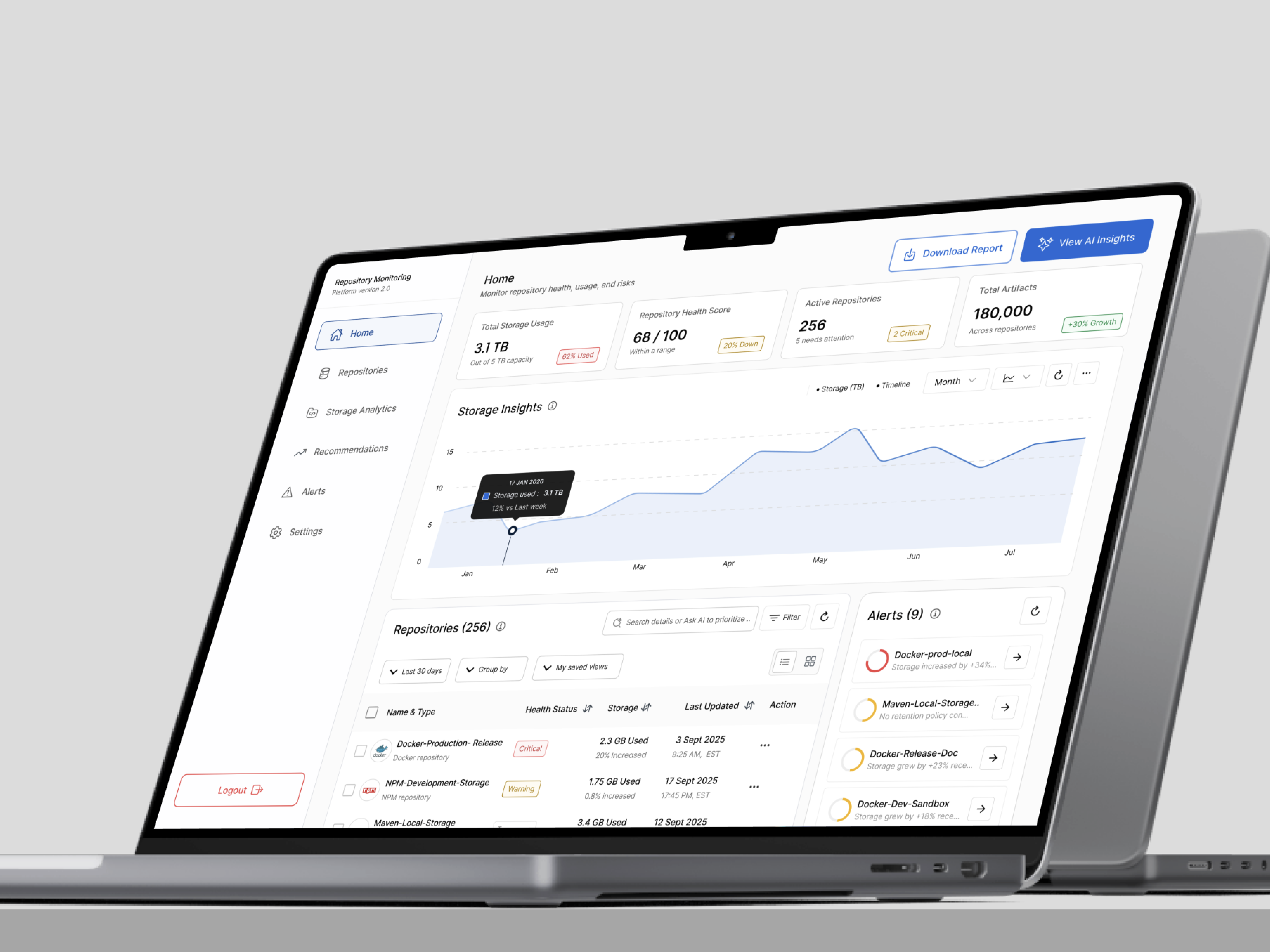
AI Powered Repository Monitoring Intelligence
From passive monitoring to proactive repository intelligence ~60% faster detection, zero manual scanning
AI Powered Repository Monitoring Intelligence
From passive monitoring to proactive repository intelligence ~60% faster detection, zero manual scanning
AI Powered Repository Monitoring Intelligence
From passive monitoring to proactive repository intelligence ~60% faster detection, zero manual scanning
Status & Year
Side Project (2026-27)
Status
Side Project (2026-27)
Status & Year
Side Project (2026-27)
Company
JFrog
Company
JFrog
Disclaimer
This project began as a personal project and was extended into a full personal AI product including a live N8N automation workflow, AI-generated repository intelligence summaries, and a low-fidelity prototype mapped to real DevOps admin workflows. System metrics reflect designed-for outcomes based on DevOps observability benchmarks.
Problem Statement & Challenges
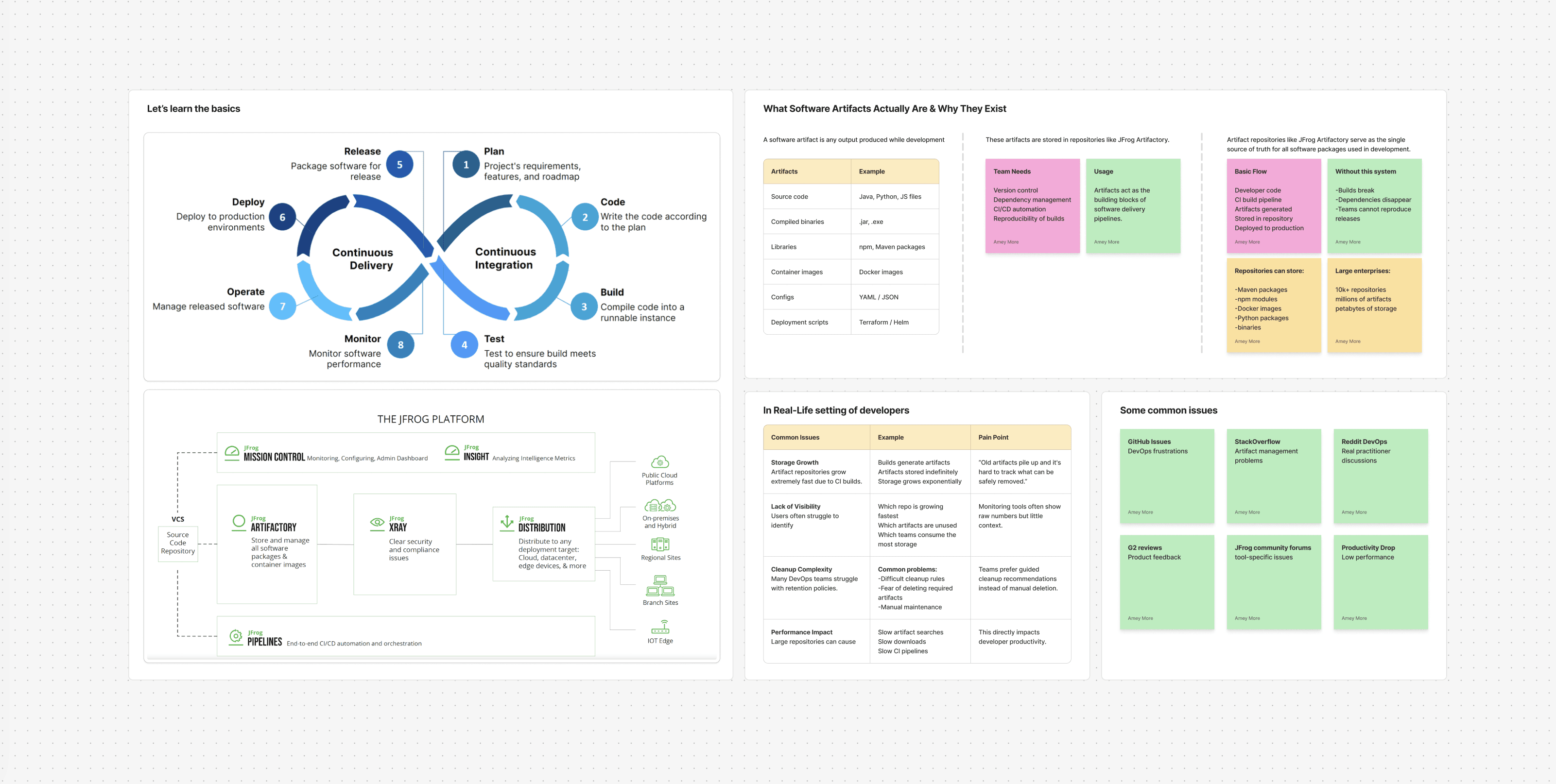
JFrog Artifactory sits at the center of enterprise CI/CD pipelines managing repositories, build packages, and storage across multi-team, multi-environment deployments. At scale, that means thousands of artifacts accumulating across dozens of repositories, with storage consumption growing silently in the background.
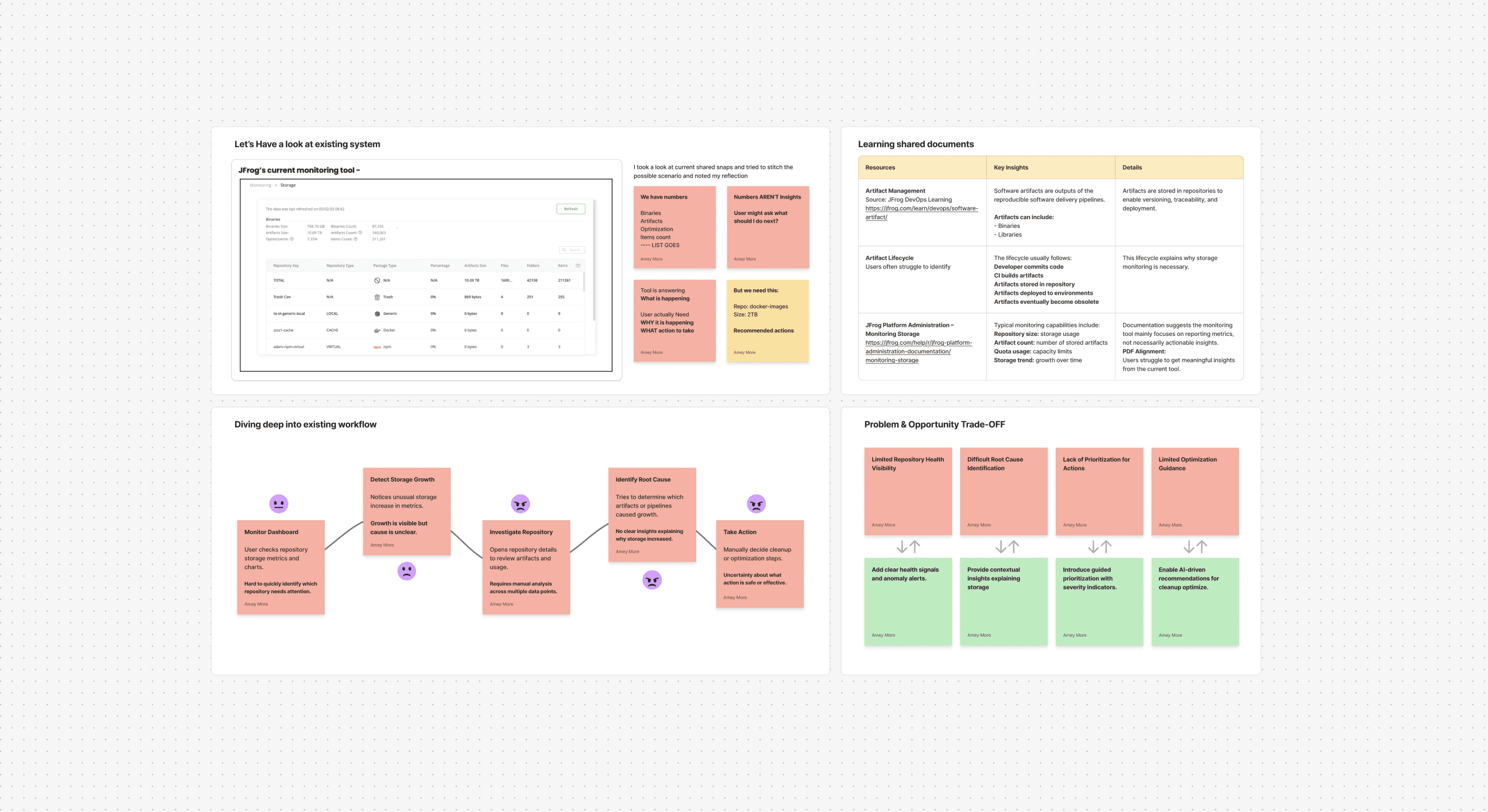
The existing monitoring view surfaced metrics without surfacing meaning. Admins could see that storage was at 94% capacity. They could not see which repository got them there, which artifacts were safe to remove, or what would happen if they waited another sprint.
Identifying storage anomalies required manual cross-referencing across multiple disconnected views. There were no health signals, no severity indicators, and no pathway from detection to action. In environments where storage degradation can stall pipelines and block releases, this wasn't a usability problem it was an operational risk sitting quietly behind a data table.
My Contribution
End-to-end ownership from ecosystem research to a live AI workflow.
Beyond designing the interface, I mapped the full JFrog artifact ecosystem from first principles, defined three primary user personas and their operational failure modes, built a structured information architecture, and designed a workflow that layers AI intelligence directly into the monitoring experience.
The capstone was building a live N8N automation workflow that simulates the AI Companion layer ingesting repository health signals and generating prioritized, actionable summaries in real time. This transformed the project from a design concept into a functioning AI product demo.
Design
1 Member (Solo)
Design
1 Member (Solo)
Product
1 Member (Solo)
Product
1 Member (Solo)
Engg+Data+Ops
N8N+Claude
Engg+Data+Ops
N8N+Claude
Timeline
1 Sprint
Timeline
1 Sprint
Persona, Jobs to be done
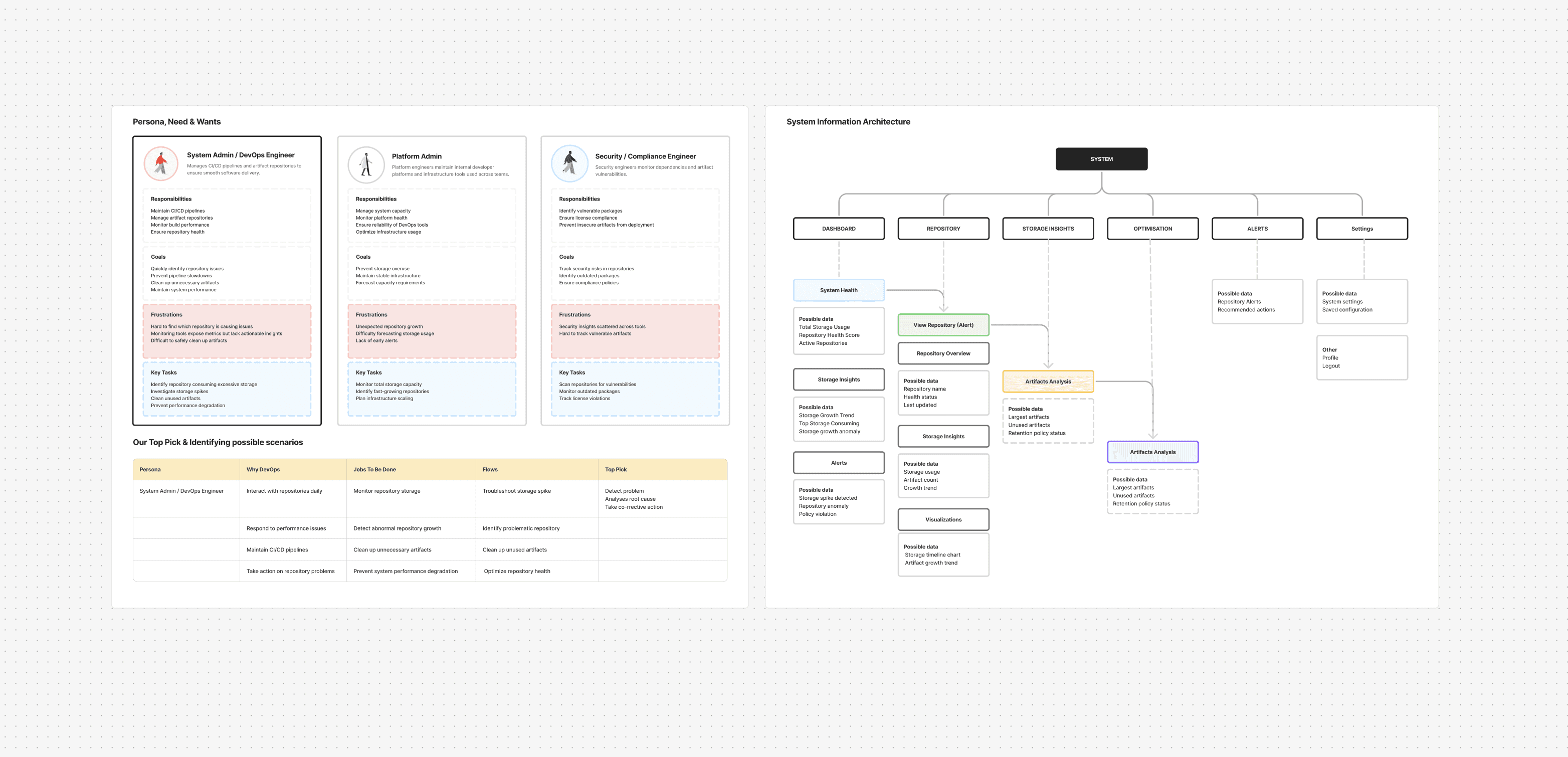
Three roles. Different responsibilities. The same failure point.
DevOps teams interact with repository storage every day through CI/CD pipelines, capacity planning, and compliance auditing. Each role operates at a different layer of the artifact stack, but all three hit the same wall: the system gives them data without direction.
Despite different responsibilities, a consistent pattern emerged across all three roles: the system told them what existed. It never told them what mattered or what to do next.
Our North Star
To move from passive monitoring towards proactive repository intelligence.
Field interaction
8 Sources
Research
8 Sources
Field interaction
8 Sources
System logs
Offline research
System logs
Offline research
Sample
Community insights
Sample
Community insights
Mapping & Analysis
2 Days
Mapping & Analysis
2 Days
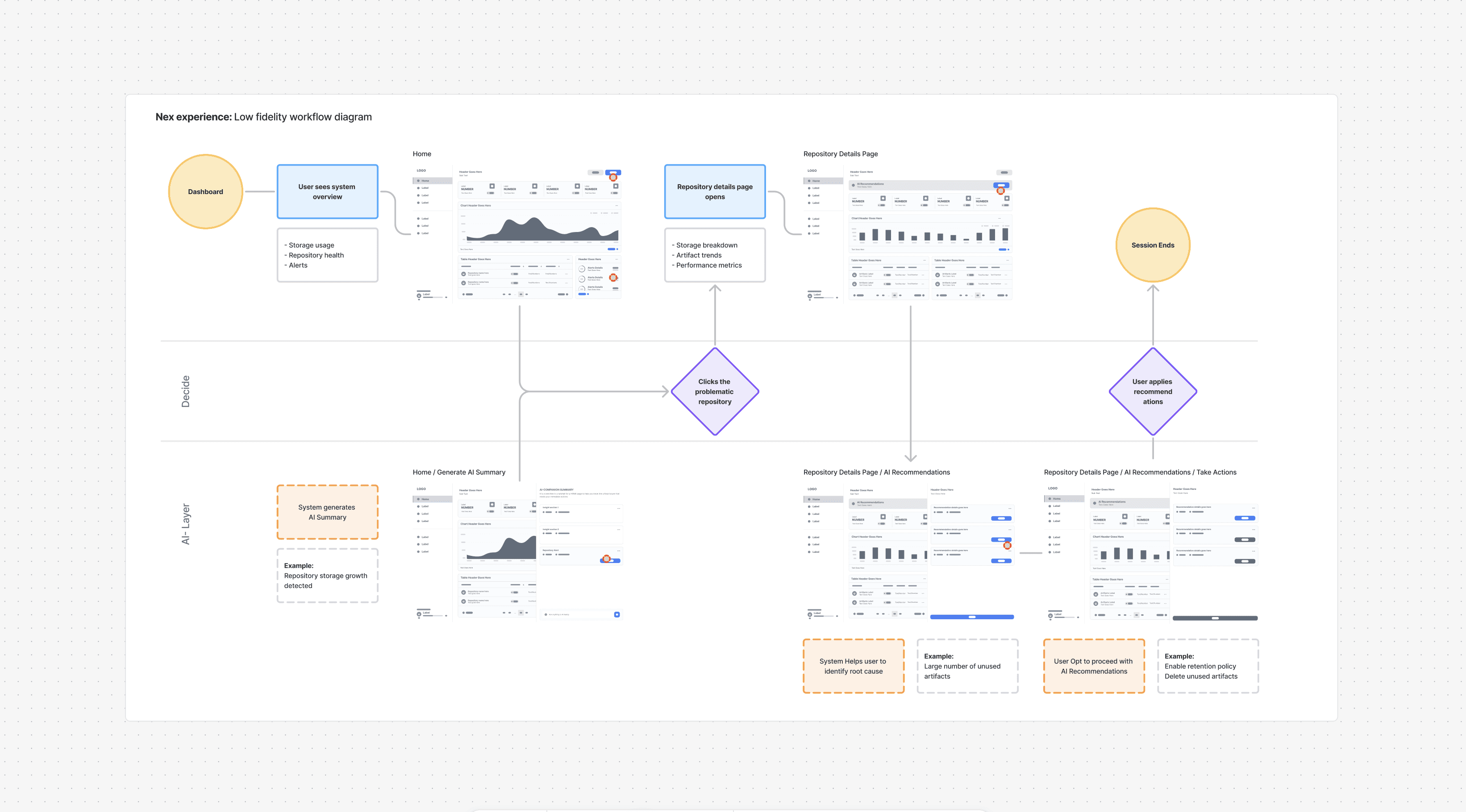
The new experience is structured around a single, opinionated flow. Rather than presenting all data simultaneously and expecting admins to derive their own conclusions, the interface guides users through three progressive stages each one narrowing from system-level awareness to repository-level action.
01: Land on the Dashboard and read system health not raw numbers.
Total Storage Usage, Repository Health Score, Active Artifact Count, and a storage trend line. A health score badge per repository replaces binary "online/offline" with a graded signal that tells admins where to look first.
02: AI Companion generates a prioritized summary before you ask.
Flags repositories approaching quota, identifies artifact clusters unused for 90+ days, surfaces retention policy gaps with direct links to act. Reactive scanning becomes proactive triage.
03: Drill into a repository. Understand why storage is growing.
One click. Storage breakdown by type, artifact volume trends, largest and unused artifact tables, AI Recommendations with severity grading (Critical / Warning / Info).
04: Act without leaving the investigation view.
Delete unused artifacts, enable retention policies, archive stale packages directly from the detail view. No settings module. No export. No context switch.
05: Validated against three KPIs.
Time to detect. Time to identify root cause. Optimization action rate.
Ideate, Test & Measure
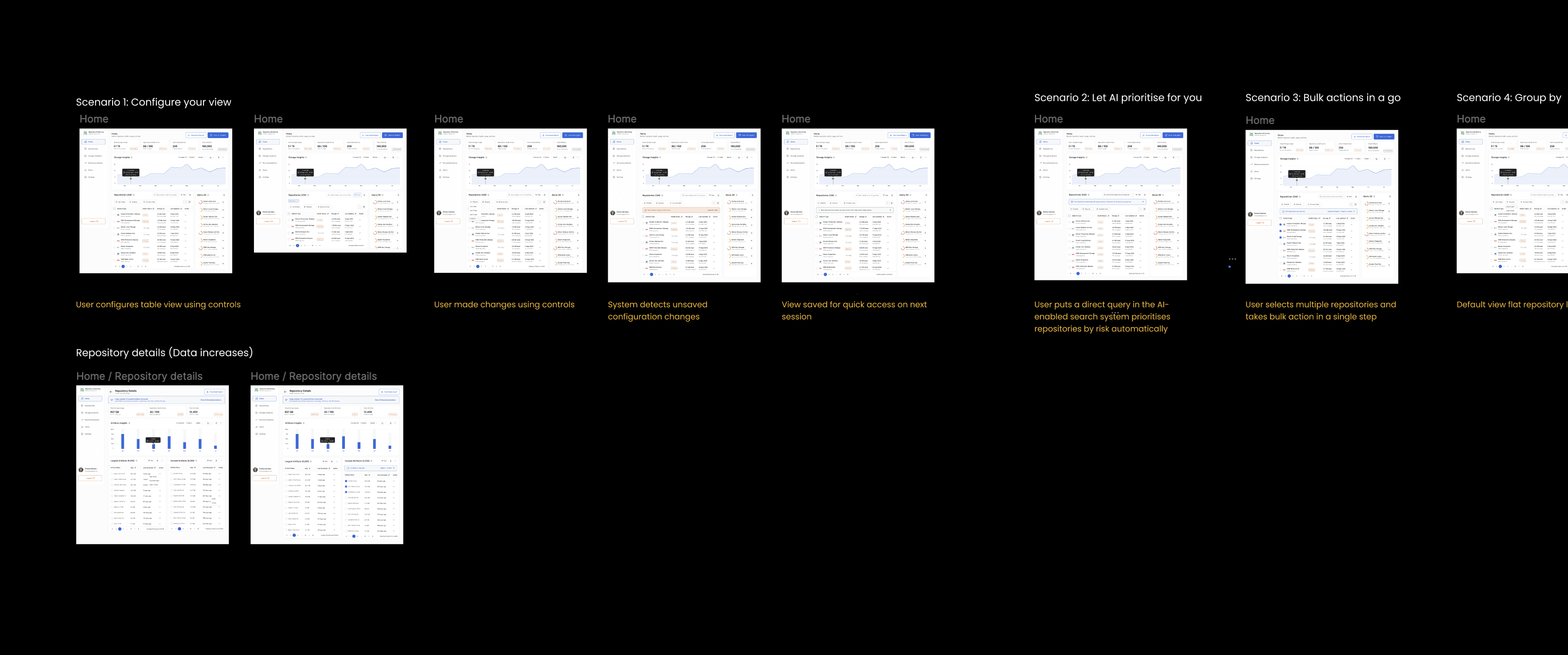
The AI Companion isn't a design mockup. It's a live workflow.
The AI Companion isn't a design mockup. It's a live workflow.
To move beyond a static prototype, I built the AI Companion layer as a functional N8N automation workflow. The workflow ingests simulated repository health signals, runs them through a Claude-powered reasoning step, and returns a structured, prioritised intelligence summary exactly as it would appear in the live product.

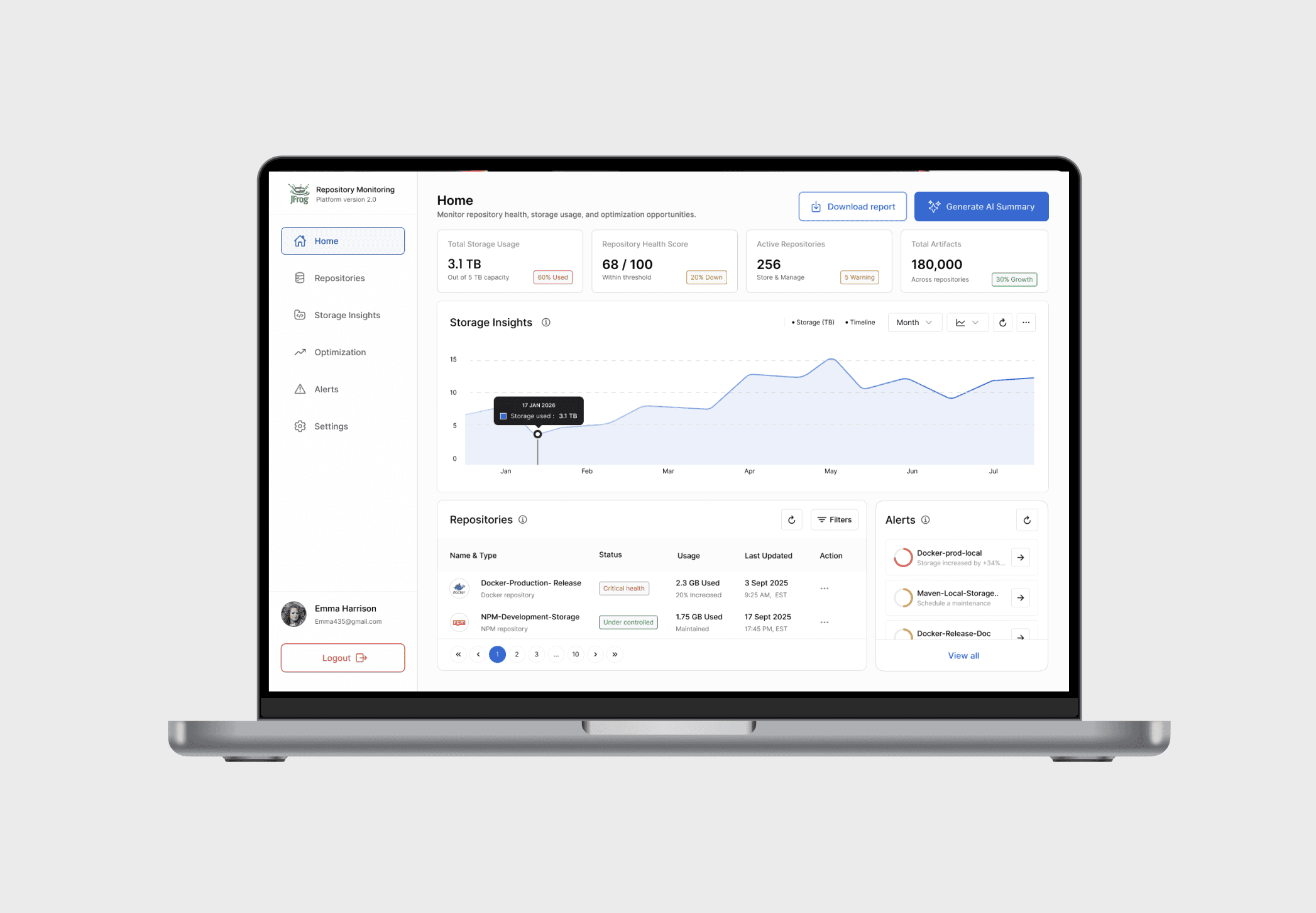
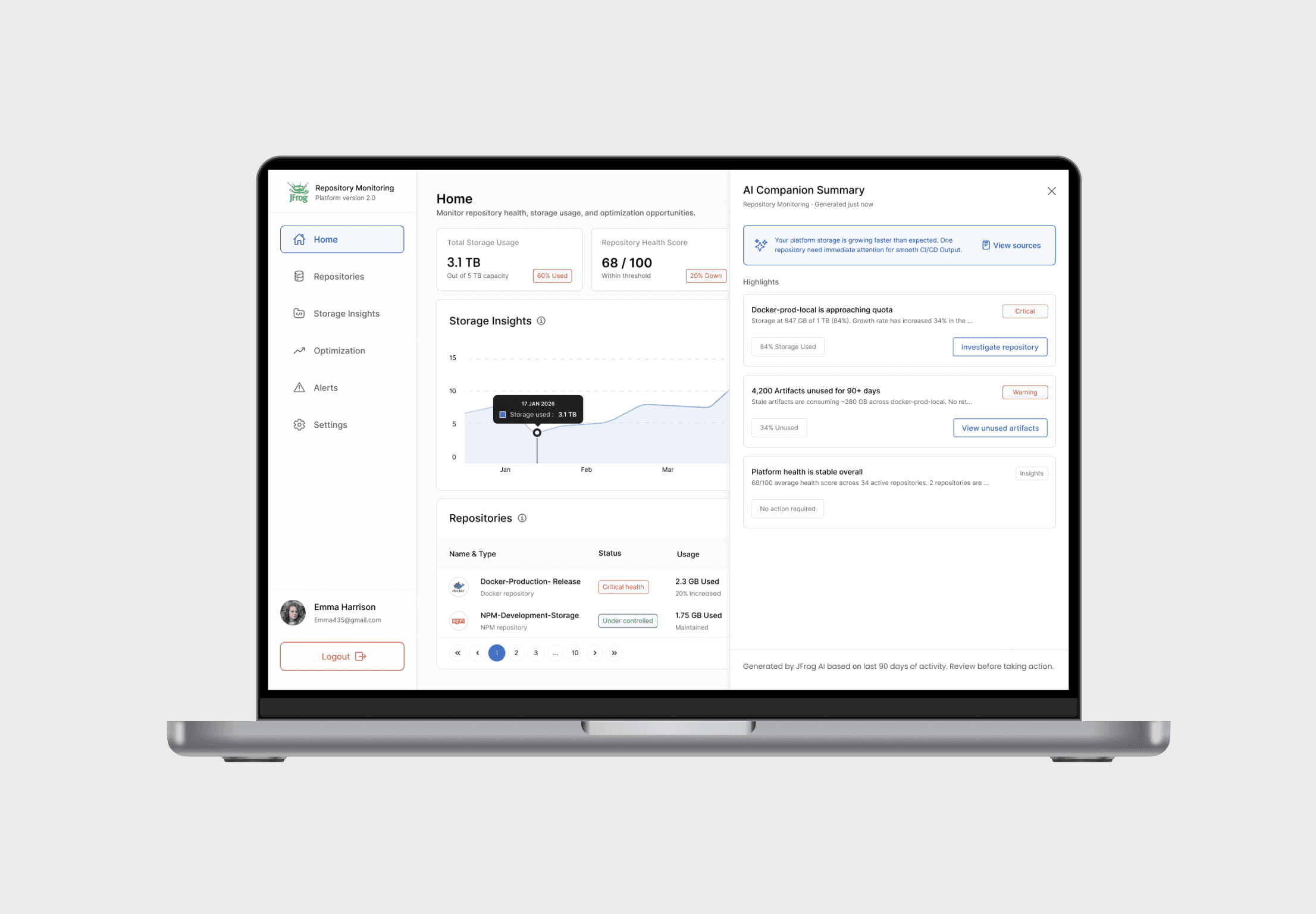
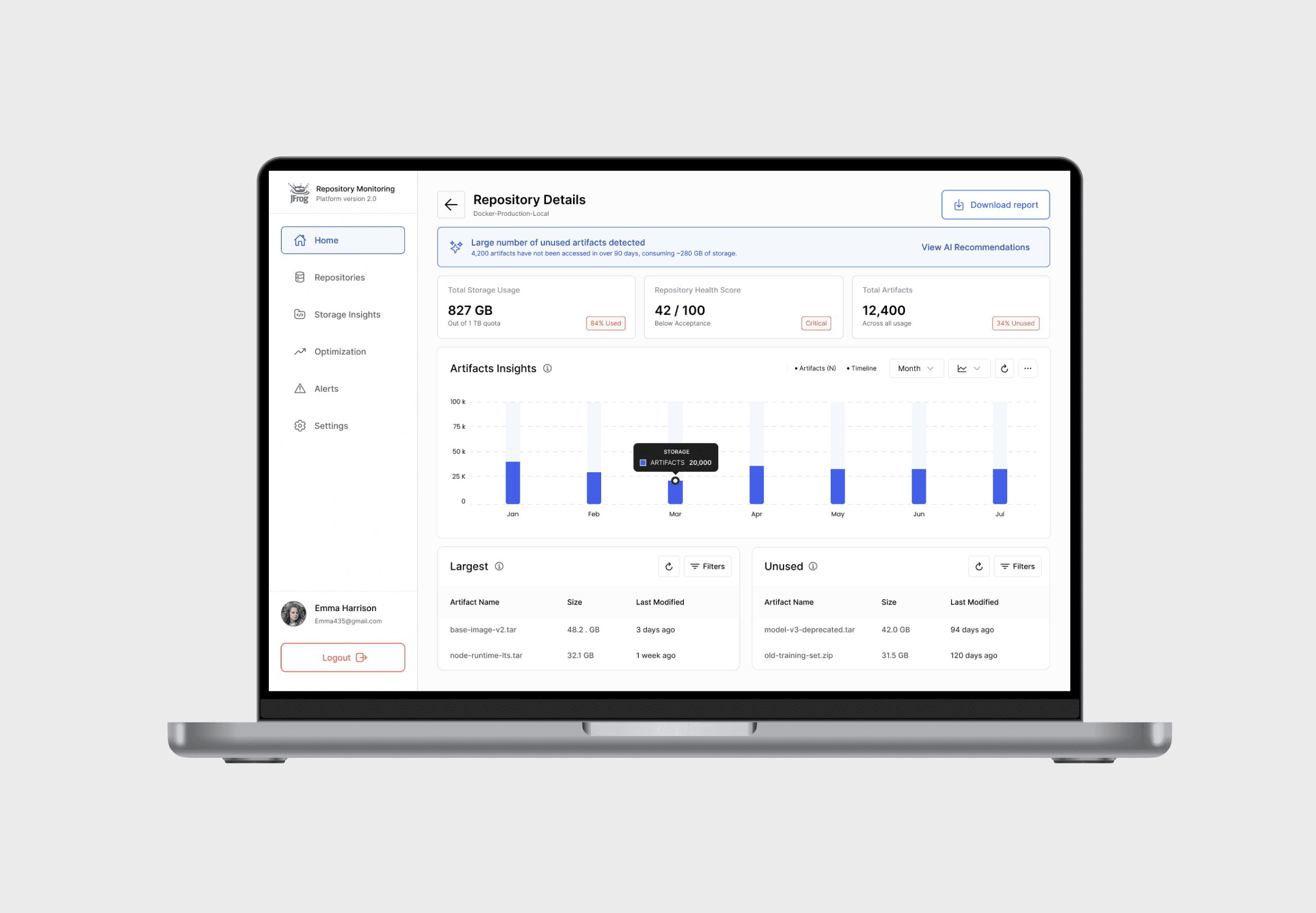
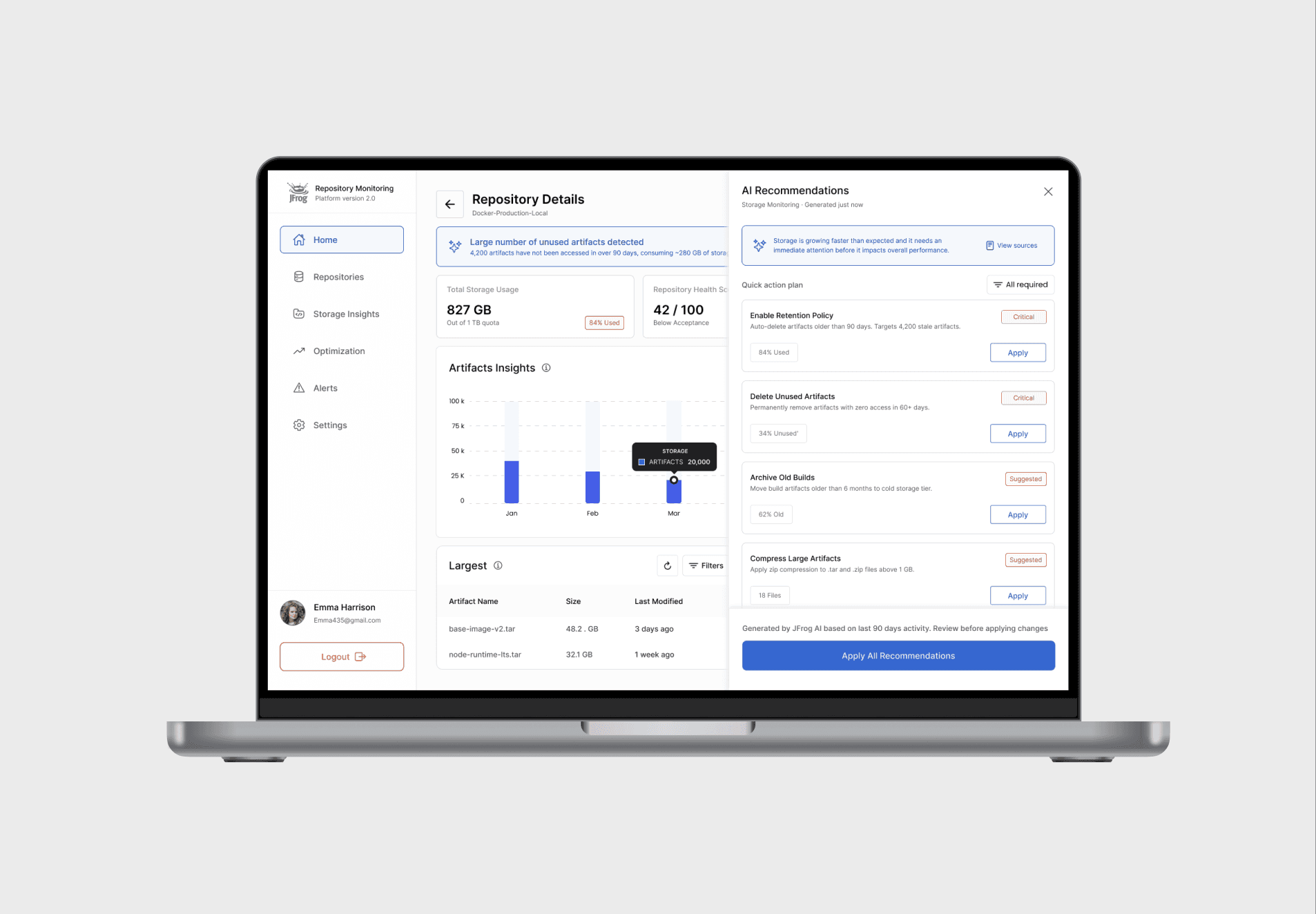

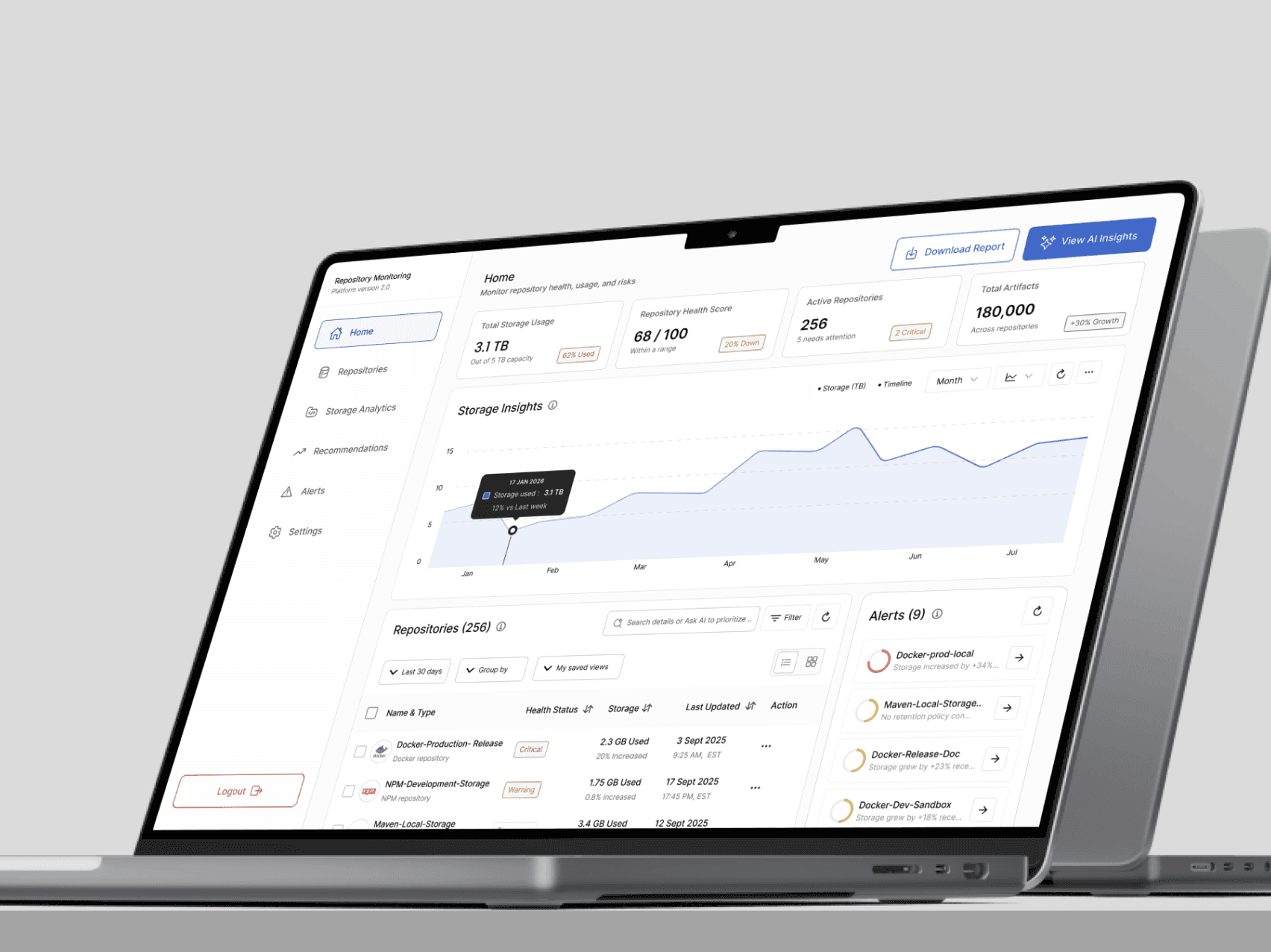
From invisible anomalies to acted-on intelligence.
From invisible anomalies to acted-on intelligence.
Impact metrics are modelled on DevOps observability benchmarks and the validation scenario outputs. These reflect the designed-for outcomes of the Monitor → Investigate → Optimize workflow and the measurable gaps the existing passive monitoring experience left open.
Impact
~60% Faster detection Time
Impact
~60% Faster detection Time
Impact
< 2mins root cause finding
Impact
< 2mins root cause finding
Impact
~280 GB Storage reclaim
Impact
~280 GB Storage reclaim
Impact
Scalable AI Intelligence
Impact
Scalable AI Intelligence
Continue Reading...

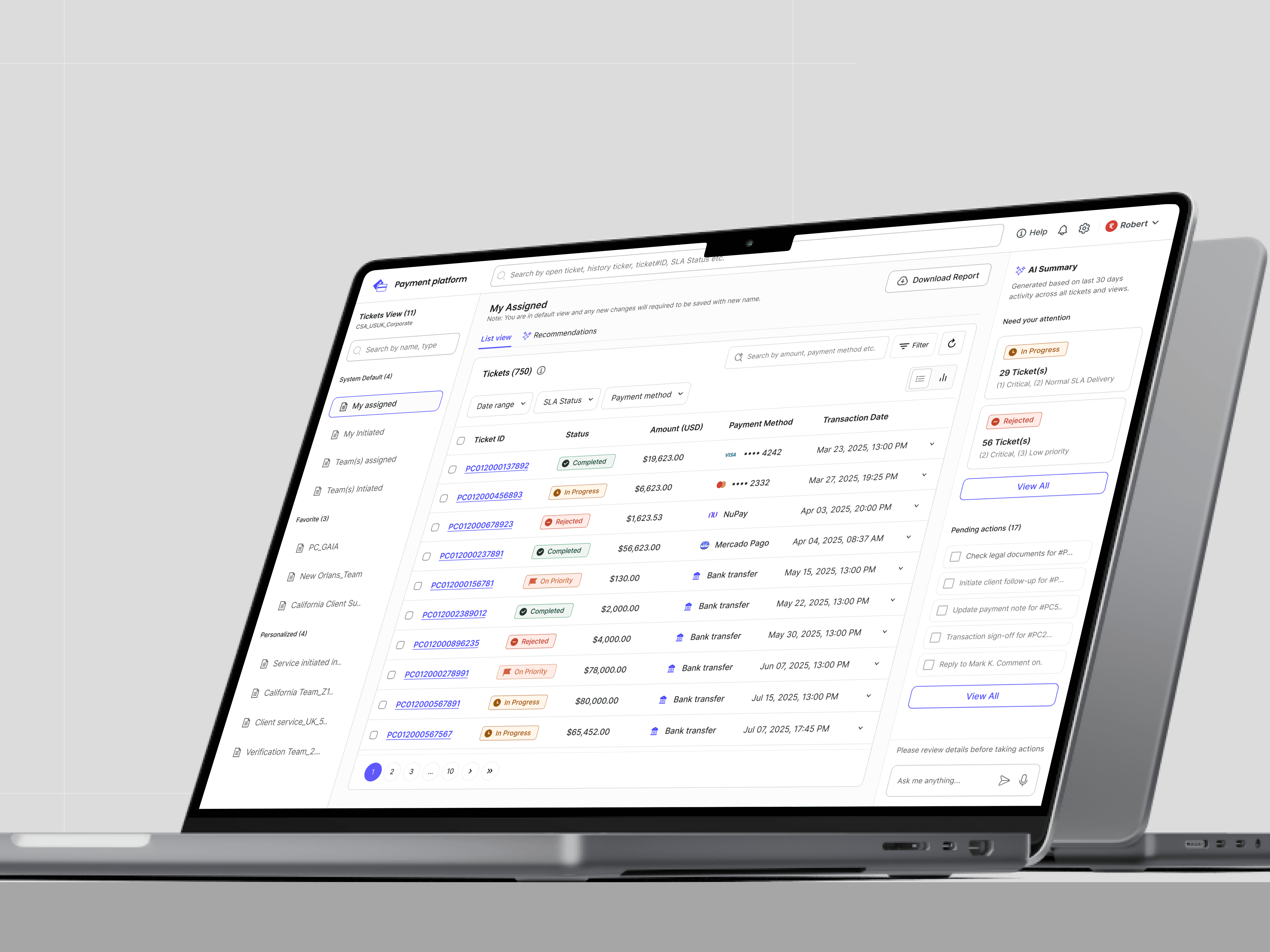
AI Powered Repository Monitoring Intelligence
From passive monitoring to proactive repository intelligence ~60% faster detection, zero manual scanning
AI Powered Repository Monitoring Intelligence
From passive monitoring to proactive repository intelligence ~60% faster detection, zero manual scanning
AI Powered Repository Monitoring Intelligence
From passive monitoring to proactive repository intelligence ~60% faster detection, zero manual scanning
Status & Year
Side Project (2026-27)
Status
Side Project (2026-27)
Status & Year
Side Project (2026-27)
Company
JFrog
Company
JFrog
Disclaimer
This project began as a personal project and was extended into a full personal AI product including a live N8N automation workflow, AI-generated repository intelligence summaries, and a low-fidelity prototype mapped to real DevOps admin workflows. System metrics reflect designed-for outcomes based on DevOps observability benchmarks.
Problem Statement & Challenges
JFrog Artifactory sits at the center of enterprise CI/CD pipelines managing repositories, build packages, and storage across multi-team, multi-environment deployments. At scale, that means thousands of artifacts accumulating across dozens of repositories, with storage consumption growing silently in the background.
The existing monitoring view surfaced metrics without surfacing meaning. Admins could see that storage was at 94% capacity. They could not see which repository got them there, which artifacts were safe to remove, or what would happen if they waited another sprint.
Identifying storage anomalies required manual cross-referencing across multiple disconnected views. There were no health signals, no severity indicators, and no pathway from detection to action. In environments where storage degradation can stall pipelines and block releases, this wasn't a usability problem it was an operational risk sitting quietly behind a data table.
My Contribution
End-to-end ownership from ecosystem research to a live AI workflow.
Beyond designing the interface, I mapped the full JFrog artifact ecosystem from first principles, defined three primary user personas and their operational failure modes, built a structured information architecture, and designed a workflow that layers AI intelligence directly into the monitoring experience.
The capstone was building a live N8N automation workflow that simulates the AI Companion layer ingesting repository health signals and generating prioritized, actionable summaries in real time. This transformed the project from a design concept into a functioning AI product demo.
Design
1 Member (Solo)
Design
1 Member (Solo)
Product
1 Member (Solo)
Product
1 Member (Solo)
Engg+Data+Ops
N8N+Claude
Engg+Data+Ops
N8N+Claude
Timeline
1 Sprint
Timeline
1 Sprint
Persona, Jobs to be done
Three roles. Different responsibilities. The same failure point.
DevOps teams interact with repository storage every day through CI/CD pipelines, capacity planning, and compliance auditing. Each role operates at a different layer of the artifact stack, but all three hit the same wall: the system gives them data without direction.
Despite different responsibilities, a consistent pattern emerged across all three roles: the system told them what existed. It never told them what mattered or what to do next.
Our North Star
To move from passive monitoring towards proactive repository intelligence.
Field interaction
8 Sources
Research
8 Sources
Field interaction
8 Sources
System logs
Offline research
System logs
Offline research
Sample
Community insights
Sample
Community insights
Mapping & Analysis
2 Days
Mapping & Analysis
2 Days
The new experience is structured around a single, opinionated flow. Rather than presenting all data simultaneously and expecting admins to derive their own conclusions, the interface guides users through three progressive stages each one narrowing from system-level awareness to repository-level action.
01: Land on the Dashboard and read system health not raw numbers.
Total Storage Usage, Repository Health Score, Active Artifact Count, and a storage trend line. A health score badge per repository replaces binary "online/offline" with a graded signal that tells admins where to look first.
02: AI Companion generates a prioritized summary before you ask.
Flags repositories approaching quota, identifies artifact clusters unused for 90+ days, surfaces retention policy gaps with direct links to act. Reactive scanning becomes proactive triage.
03: Drill into a repository. Understand why storage is growing.
One click. Storage breakdown by type, artifact volume trends, largest and unused artifact tables, AI Recommendations with severity grading (Critical / Warning / Info).
04: Act without leaving the investigation view.
Delete unused artifacts, enable retention policies, archive stale packages directly from the detail view. No settings module. No export. No context switch.
05: Validated against three KPIs.
Time to detect. Time to identify root cause. Optimization action rate.
Ideate, Test & Measure
The AI Companion isn't a design mockup. It's a live workflow.
The AI Companion isn't a design mockup. It's a live workflow.
To move beyond a static prototype, I built the AI Companion layer as a functional N8N automation workflow. The workflow ingests simulated repository health signals, runs them through a Claude-powered reasoning step, and returns a structured, prioritised intelligence summary exactly as it would appear in the live product.
From invisible anomalies to acted-on intelligence.
From invisible anomalies to acted-on intelligence.
Impact metrics are modelled on DevOps observability benchmarks and the validation scenario outputs. These reflect the designed-for outcomes of the Monitor → Investigate → Optimize workflow and the measurable gaps the existing passive monitoring experience left open.
Impact
~60% Faster detection Time
Impact
~60% Faster detection Time
Impact
< 2mins root cause finding
Impact
< 2mins root cause finding
Impact
~280 GB Storage reclaim
Impact
~280 GB Storage reclaim
Impact
Scalable AI Intelligence
Impact